How to Pack Dishes for Moving: The Complete Guide

Why you can trust Move.org
movers helped every month
20k
moving grants awarded
24
moving companies evaluated
156
years of expert experience
80+

For over 8 years, Move.org experts have examined pricing, credentials, and real customer reviews to give you (human) recommendations you can trust. See how we review.

Brittney Dulin-Rogers
Apr 29, 2026
Icon Time To Read4 min read
Icon CheckEdited ByRebecca Edwards

Bio (leave blank - RE will complete)

This article is part of Move.org’s ongoing collaboration with Colonial Van Lines University (CVLU) to provide expert-backed moving guidance. All content is written and reviewed by Move.org’s editorial team and reflects our independent research standards.

If there is one box that makes people nervous before a move, it is the dishware box.

You can replace a lamp. You can reorder throw pillows. But your grandmother’s china, the wine glasses from your wedding, or the clay bowl your kids made for you when they were younger? Those feel different. When people search for how to pack dishes for moving, they are not just looking for instructions. They are looking for reassurance.

The good news: packing fragile kitchen items is completely manageable if you use the right materials and follow a method that actually protects them. Colonial Van Lines University helps us walk through it step by step.

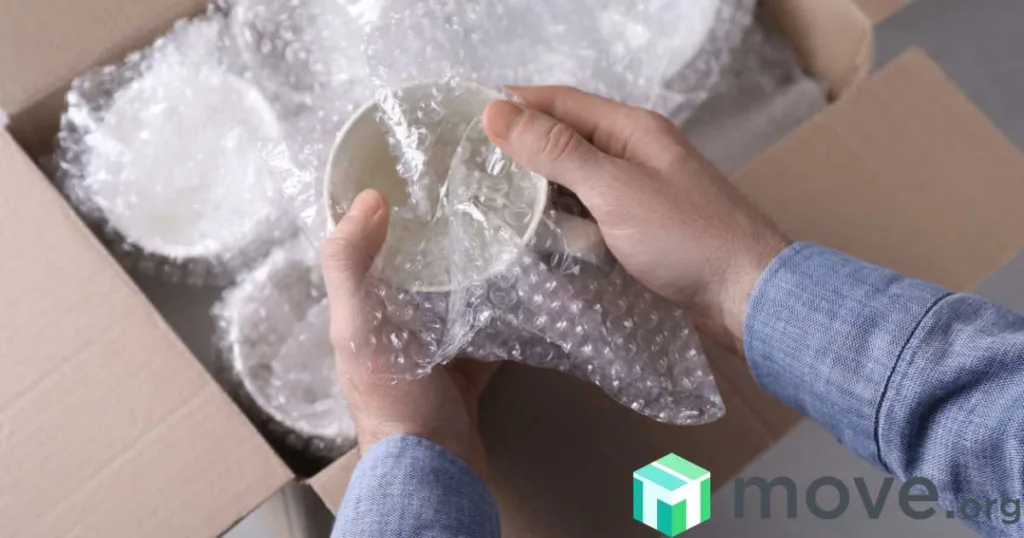
Hands wrapping a mug with bubble wrap above a box filled with wrapped dishes

Image: Liudmila Chernetska, iStock

Why dishes cause moving anxiety

Dishes are heavy, breakable, and often sentimental. They also tend to be packed toward the end of the moving process, when you are tired and tempted to rush.

That combination is where damage happens.

When packing fragile items for moving, the goal is simple: prevent shifting and absorb shock. If nothing moves inside the box and each item is properly cushioned, your dishes have a very high chance of arriving intact.

Materials checklist: What you actually need

Before you pack plates and glasses, gather your supplies. Skipping this step is where most mistakes begin.

  • Dish pack boxes or double-walled boxes. These are stronger than standard boxes and designed for heavier kitchen items.
  • Packing paper. Avoid the newspaper. Ink can transfer, and the paper is thinner.
  • Bubble wrap. Especially useful for stemware and delicate heirlooms.
  • Cardboard dividers. Ideal for separating glasses and mugs.
  • Packing tape. Reinforce the openings of every box.
  • Permanent marker and “FRAGILE” labels. Label multiple sides clearly.

Before adding anything to the box, secure the bottom seam with tape. Dishes are heavier than they look, and a weak base is one of the fastest ways to lose a box.

Video: How to Pack & Move Your Fine China

Play Video

CVLU experts demonstrate how to pack your dishes and fine China for maximum protection. Video: CVLU

Step-by-step: How to pack dishes for moving

Take your time here. Careful packing beats fast packing every time.

Step 1: Cushion the bottom

Crumple packing paper and create a thick, protective layer at the bottom of the box. Aim for two to three inches. This acts as a shock absorber if the box is set down firmly.

Never place dishes directly against bare cardboard.

Step 2: Wrap plates individually

To properly pack plates and glasses, each piece needs its own wrapping.

  • Lay one plate flat in the middle of a piece of packing paper.
  • Keep folding the paper around it until the whole plate is covered.
  • If the plate is thin, delicate, or holds special meaning to you, wrap it again with a second sheet.

Here is another important tip many people miss: Pack plates vertically, not flat.

Plates are structurally stronger when standing on their edges, similar to vinyl records. Place them snugly side by side inside the box, with paper cushioning between them. This reduces pressure and minimizes the chance of cracking.

Step 3: Wrap and stack bowls carefully

Wrap each bowl individually in packing paper. Bowls can be stacked, but always add crumpled paper between each one to prevent pressure from transferring downward.

Heavier serving bowls should be wrapped in paper, then in an additional layer of bubble wrap. Place them in the center of the box, surrounded by cushioning.

Step 4: How to pack plates and glasses safely

Glasses need a little extra love.

Start by putting a small piece of packing paper inside the glass. This gives it some internal support, so it doesn’t cave in.

Now grab the bubble wrap. When it comes to moving fragile items, bubble wrap is your best friend. Use more than you think you need.

Wrap the entire glass until you can no longer feel it. One thin layer is not enough. You want it cushioned. Think soft and padded, not barely covered.

For wine glasses or thin crystal, wrap the stem first, then wrap the whole glass again. If it feels excessive, it’s probably correct.

Once wrapped, place glasses upright in a box with dividers. The dividers keep them from bumping into each other. That bumping is what causes cracks.

Try not to lay glasses on their sides. Standing upright gives them more strength and stability during the move.

Step 5: Fill every gap

After placing the dishes in the box, fill any empty spaces with crumpled packing paper. Add a final protective layer on top before sealing.

Close the box and gently shake it. If you feel movement inside, open it and add more padding. Properly packed items should feel secure and solid.


Common mistakes to avoid

Here’s where things usually go wrong.

  • Overpacking the box. If a box feels difficult to lift, it’s too full. Aim to keep each box under 40-50 pounds.
  • Using towels instead of packing paper. It may seem efficient, but towels shift during transport. Packing paper absorbs impact better.
  • Skipping double wrapping. If an item is emotionally or financially valuable, add an extra layer of protection. It is easier to add paper now than replace something later.
  • Forgetting to label clearly. Mark boxes as “FRAGILE” or “THIS SIDE UP”. Clear labeling lessens mishandling.

By taking your time with these details now, future you will be very grateful on unpacking day.

How to unpack dishes safely

Unpacking requires care, too.

Open dish boxes early so heavier boxes are not stacked on top of them. Remove items one at a time and unwrap carefully. If shelving is not ready, keep packing paper nearby to prevent items from being left exposed.

Inspect as you unpack. If something is damaged, document it promptly for insurance or moving company claims.

When to consider professional packing

Many people successfully pack their own dishes using the steps above. However, you may want professional assistance if you have:

  • Antique china or heirloom pieces
  • High-end crystal or collectibles
  • Large kitchen inventories
  • Limited time before moving day

Professional movers are trained in moving fragile items and often offer valuation coverage. For some households, the added protection and efficiency provide valuable peace of mind.

Handle with care (and confidence)

Learning how to pack dishes for moving is less about perfection and more about preparation.  Most broken dishes happen because someone rushed.

If you would prefer expert help protecting your valuables, compare reputable movers in your area and choose a company experienced with fragile kitchen items.

Brittney Dulin-Rogers
Written by
Brittney Dulin-Rogers is a writer with a background in blogging, radio marketing, and FTL/LTL shipping. She’s spent years turning real-life experience into writing that’s practical, approachable, and easy to connect with. In her twenties, Brittney moved more times than she can count, all thanks to her free spirit and love of new beginnings. Most recently, she packed up for a cross-country move from South Carolina to Utah in 2021 — and then back home again in 2024. Now settled (for the moment), she writes about moving with the kind of insight that only comes from living it. When she’s not writing, she’s probably wandering through a HomeGoods aisle, watching a true crime documentary, or driving her kids to the next thing on the schedule.