The Latchkey Tech Guide: Keeping Kids Safe While You’re at Work in a New City

Why you can trust Move.org
movers helped every month
20k
moving grants awarded
24
moving companies evaluated
156
years of expert experience
80+

For over 8 years, Move.org experts have examined pricing, credentials, and real customer reviews to give you (human) recommendations you can trust. See how we review.

Brittney Dulin-Rogers
May 06, 2026
Icon Time To Read4 min read
Icon CheckEdited ByRebecca Edwards

Brittney Dulin-Rogers is a Move.org writer covering moving and relocation, with a background in freight shipping and extensive firsthand experience with cross-country moves.

A new city changes everything: new school, new routine, unfamiliar streets. And if you’re working, you've probably already asked yourself: Is my child safe at home alone here?

That concern is real, but it doesn’t have to spiral into fear-based parenting. The truth is, latchkey kids' safety tips today look different from those they did years ago. With the right mix of structure, communication, and simple technology, kids can safely build independence, even in a brand-new place.

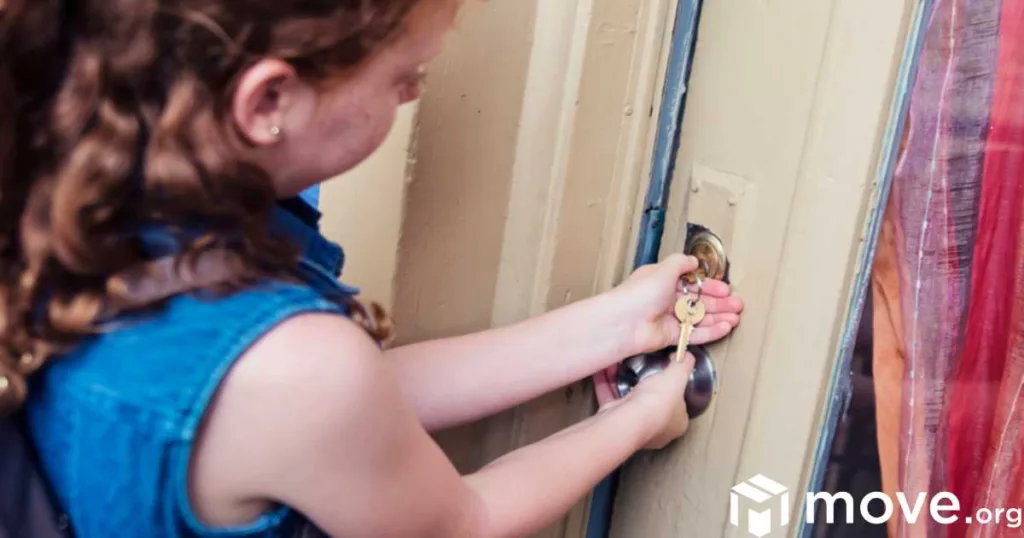
Young redhead girl getting home alone after school day. She is holding the house key to open the door.

Image: martinedoucet, iStock

In short:

Kids can safely stay home alone with a combination of clear rules, consistent routines, and a few well-chosen tools. Safety is less about constant supervision and more about preparation.

At what age can kids stay home alone?

There's no magic age for this, and it even varies by state. Most recommendations, including those from SafeWise, fall around 10 to 14, but maturity matters most.

Instead of zeroing in on age, ask:

  • Can they follow multi-step instructions?
  • Do they know how to handle basic emergencies?
  • Will they actually follow rules when no one is watching?

If the answer is “yes” more often than not, you’re likely in a workable place to start building independence.

What actually keeps latchkey kids safe

When parents think about how to keep kids safe at home alone, they often jump straight to gadgets. But safety starts long before any app or camera.

Clear rules and expectations

Kids don’t need a long speech about safety. They need a few clear rules that they will actually remember.

For example, keep the doors locked, don't answer the door, and stick to what you've already approved.

Those basics become your home-alone rules. Write them down and keep them somewhere visible. Consistency matters more than making it complicated.

Check-in systems

You don’t have to check in all day to feel like your kids are okay.

Most of the time, it’s just a quick text when they get home, a call around the same time each day, or a simple “I’m good” message.

Simple check-ins keep you in the loop without turning it into constant back-and-forth.

Emergency planning

If your child is staying home alone, there are a few things they really need to know: how to call 911, their full address, the name of a trusted neighbor, and where to find emergency contacts. Go over it more than once so it actually sticks and feels natural if they ever need it.


How do you keep kids safe after school when you’re working?

For most families, after-school safety comes down to three layers:

  1. A predictable routine
  2. A communication plan
  3. A backup adult nearby

A simple after-school routine could be: walk straight home, lock the door, grab a snack and check in, then start homework or a set activity.

The more predictable the routine, the fewer decisions your child has to make alone.

Smart tech that helps, without overdoing it

There’s a reason smart home safety for kids is such a growing category. The right tools can give you peace of mind and give your child a sense of structure.

The key is choosing tech that supports your system, not replaces it.

Video doorbells, cameras, and smart locks

These tools are helpful because they reinforce rules you’ve already set:

  • Video doorbells let you see who’s at the door without opening it
  • Indoor cameras (used thoughtfully) can confirm your child made it home
  • Smart locks allow you to check if doors are secured

Used correctly, these smart gadgets help answer one question: Is everything normal?

Location sharing and communication apps

For parents exploring technology to monitor kids at home, simple is better:

  • Location sharing for the walk home
  • Messaging apps for quick check-ins
  • Emergency contact shortcuts

You don’t need ten apps. You need one or two that your child will actually use without resistance — even better, you can get it all in one device with a kids smartwatch.

When tech helps vs. creates anxiety

Here’s the honest part: more technology doesn’t always equal more safety. If you’re constantly checking cameras, refreshing apps, and texting every five minutes, that’s not a safety system. That’s anxiety with Wi-Fi.

Good tech should reduce the number of “what if” thoughts, confirm routines are followed, and stay mostly in the background. If it’s doing the opposite, scale it back.

How to build independence safely

Safety and independence aren’t opposites. They’re built together.

Gradual responsibility

Start small with just 30 minutes alone, then gradually build to an hour and eventually a full afternoon. Taking it step by step helps your child gain confidence, and honestly, it does the same for you.

Practice real-life scenarios

Walk through situations before they happen by asking questions like, “What do you do if someone knocks?” “What if the power goes out?” or “What if you feel scared?” Let your child answer first, then step in to fill any gaps so they feel prepared, not panicked.

Teach decision-making

Instead of creating a rule for every possible situation, focus on explaining the “why” behind the rule, like not opening the door because you can’t verify who’s there, or not leaving the house so you always know where they are. When kids understand the reasoning, they’re more likely to make smart choices on their own when something unexpected comes up.

New city challenges to plan for

Relocating adds a layer that most latchkey kids' safety tips don’t fully account for: unfamiliar surroundings.

Unfamiliar neighborhoods

Your child doesn’t yet have a mental map of what’s “normal” in a new place, so it’s important to build that together. Practice their route a few times, point out familiar landmarks along the way, and identify “safe places” they can go if needed, so everything feels a little more predictable.

New routes, neighbors, and contacts

Before your child spends time home alone:

  • Introduce yourself to at least one neighbor
  • Share contact info with a trusted nearby adult
  • Make sure your child knows who they can go to in an emergency

You’re rebuilding your safety net from scratch, so make it intentional.

Rebuilding trust systems

In a new city, routines won’t feel automatic right away, and that’s completely normal.

There will be a short adjustment period where check-ins happen more often, rules need a few extra reminders, and you stay more hands-on.

As your child gets comfortable, you can gradually pull back and let their confidence take the lead.

Practical takeaway: Your after-school safety setup

If you want something you can use today, start here.

Box Pin
Your latchkey safety checklist:
  • A short list of home-alone rules
  • A quick daily check-in
  • Emergency contacts somewhere easy to find
  • One neighbor or nearby adult you trust
  • A route home they’ve practiced with you
  • Basic tech if you want it, like a doorbell cam or location sharing
  • An after-school routine, they already know how to handle on their own

Independence with a safety net

Safety isn’t about watching your child every second. It’s about making sure they know what to do and feel okay doing it on their own. A simple routine, a way to check in, and a little bit of tech in the background can take a lot of the pressure off.

If you’re still figuring out what works, SafeWise has practical ideas you can actually use without overthinking it.

Brittney Dulin-Rogers
Written by
Brittney Dulin-Rogers is a writer with a background in blogging, radio marketing, and FTL/LTL shipping. She’s spent years turning real-life experience into writing that’s practical, approachable, and easy to connect with. In her twenties, Brittney moved more times than she can count, all thanks to her free spirit and love of new beginnings. Most recently, she packed up for a cross-country move from South Carolina to Utah in 2021 — and then back home again in 2024. Now settled (for the moment), she writes about moving with the kind of insight that only comes from living it. When she’s not writing, she’s probably wandering through a HomeGoods aisle, watching a true crime documentary, or driving her kids to the next thing on the schedule.